
Custom Mix Design
Custom Mix Design for Construction 3D Printing
We do not just consult — we print ourselves. Hands-on construction 3D printing experience lets us develop mix designs that work on real sites, not only in a lab. We help clients build formulations from local materials, tuned to project requirements and climate — cutting logistics costs and keeping print quality consistent.
Request mix design consultation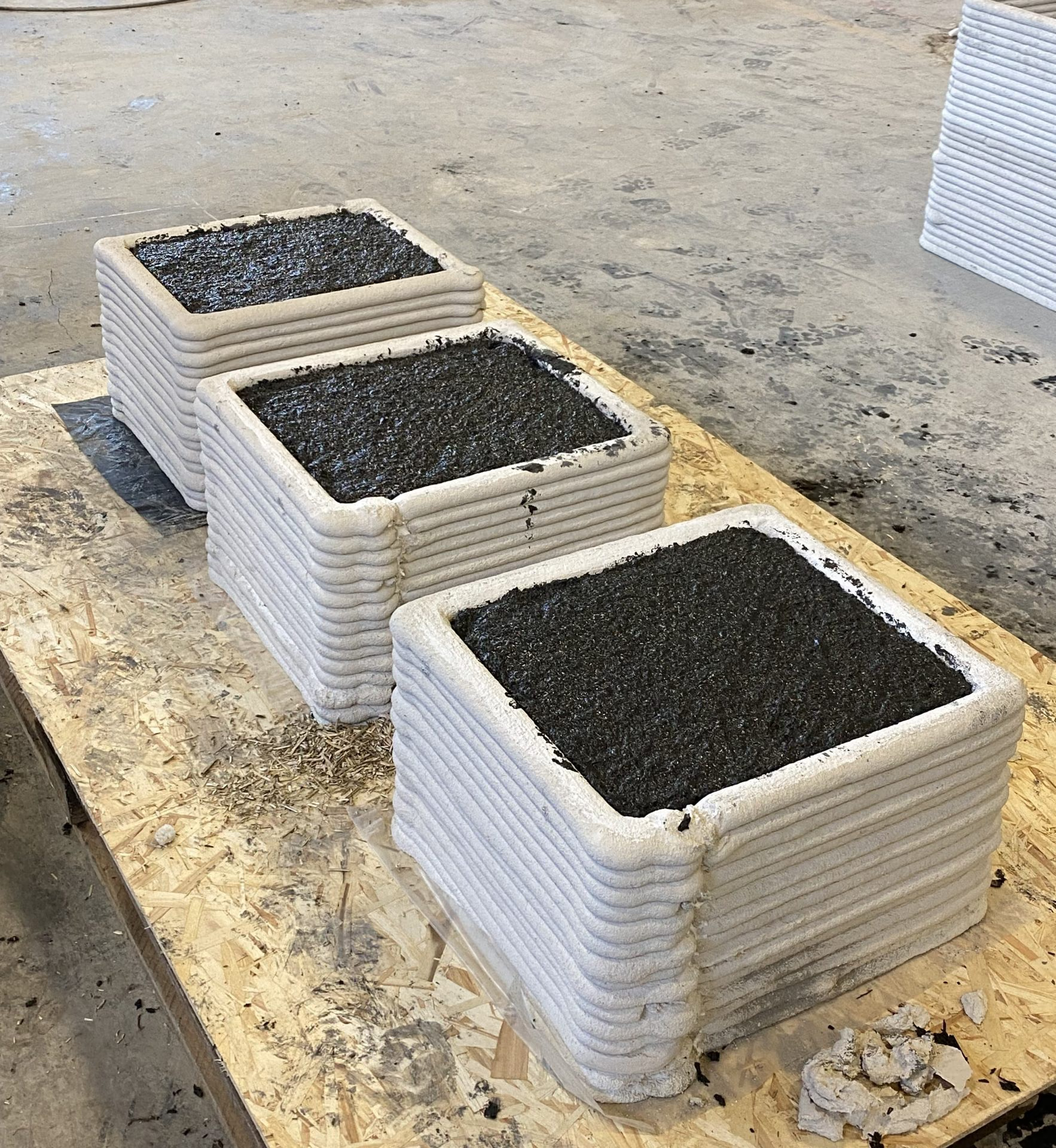
How We Built Our Expertise
The challenge
Early on, high-quality mixes for construction 3D printing were scarce. Off-the-shelf solutions failed to extrude consistently, cracked easily, and did not meet the strict demands of the technology.
The solution
We partnered with research institutes to develop proprietary mix designs, tested them on live sites, and iteratively improved performance in the field.
The result
Unique architectural structures built with our custom mixes. Cracking during printing solved. Stable, continuous extrusion achieved. Deep practical expertise we now bring to every consulting project.
Material science
Every formulation starts with what is available on site
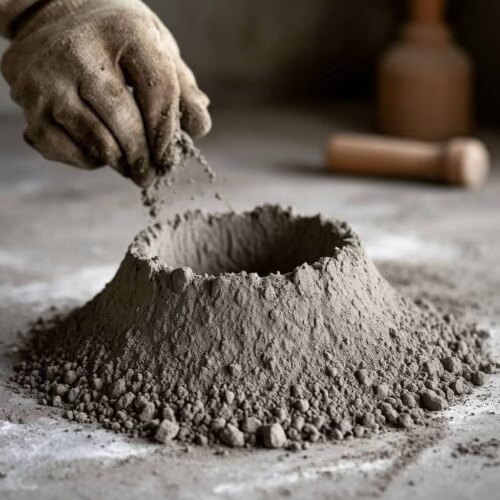
We study local sand, cement, and aggregates — then tune rheology, pot life, and strength for your climate and printer.
Why Develop a Mix from Local Materials
The problem with pre-mixed solutions
High logistics costs when mixes travel thousands of kilometers. Supplier dependency — delivery delays can stop the entire project. Poor adaptation to local conditions. High carbon footprint from transporting heavy materials.
The advantage of a custom local formulation
Logistics savings by using materials available near the site. Independence from distant suppliers. Climate-specific optimization. Full quality control over composition. Lower carbon footprint by minimizing transport.
Consulting package
We help you create a 3D printing mix from local materials that prints without cracking and meets your strength targets.
1 Material and project analysis
Local materials, project requirements, and site climate conditions.
2 Mix design development
Component ratios, modifying additives, and a formulation built around your materials.
3 Laboratory testing
Rheology, pot life, and setting speed — adjusted before field trials.
4 Test printing
Validation on your 3D printer: extrusion quality, crack resistance, process stability.
5 Technology transfer
Final mix design, mixing instructions, and quality-control parameters.
6 Technical support
Adaptation when raw materials or suppliers change; support for scale-up.
Adaptation to Climate Conditions
Cold climate (~0°C / 32°F)
Accelerated setting, protection against early-age freezing, stable performance at low temperatures.
Temperate climate (15–25°C / 59–77°F)
Balanced pot life and setting speed for predictable, comfortable printing.
Hot climate (up to +40°C / 104°F)
Retarded setting, protection against rapid moisture loss, rheological stability in heat.
Humid climate
Strict moisture control, segregation prevention, and consistent performance in high humidity.
Why Work With Us
We print ourselves
We are practitioners, not theorists. Real project experience tells us which mix properties matter on site.
Practical expertise
We know how the mix behaves in wind, heat, cold, and humidity — not only under lab conditions.
Comprehensive approach
From raw material selection to the compressive strength of the finished structure.
Flexibility
Every project is unique. We adapt to your materials, climate, and goals — not one-size-fits-all bags.
Cost-effectiveness
Local formulations cut logistics costs and make construction 3D printing viable in your region.
Your project
Tell us about your site — we will develop a mix for your materials and goals
Have a 3D printer and access to local materials? We will help you build an optimal formulation that works in your conditions and saves on logistics.
- Project region and climate
- Available local materials
- Strength and performance requirements
- Project scale and print volume