
Portfolio · Sculptural architecture
The Cat House
A figurative pavilion in printed concrete
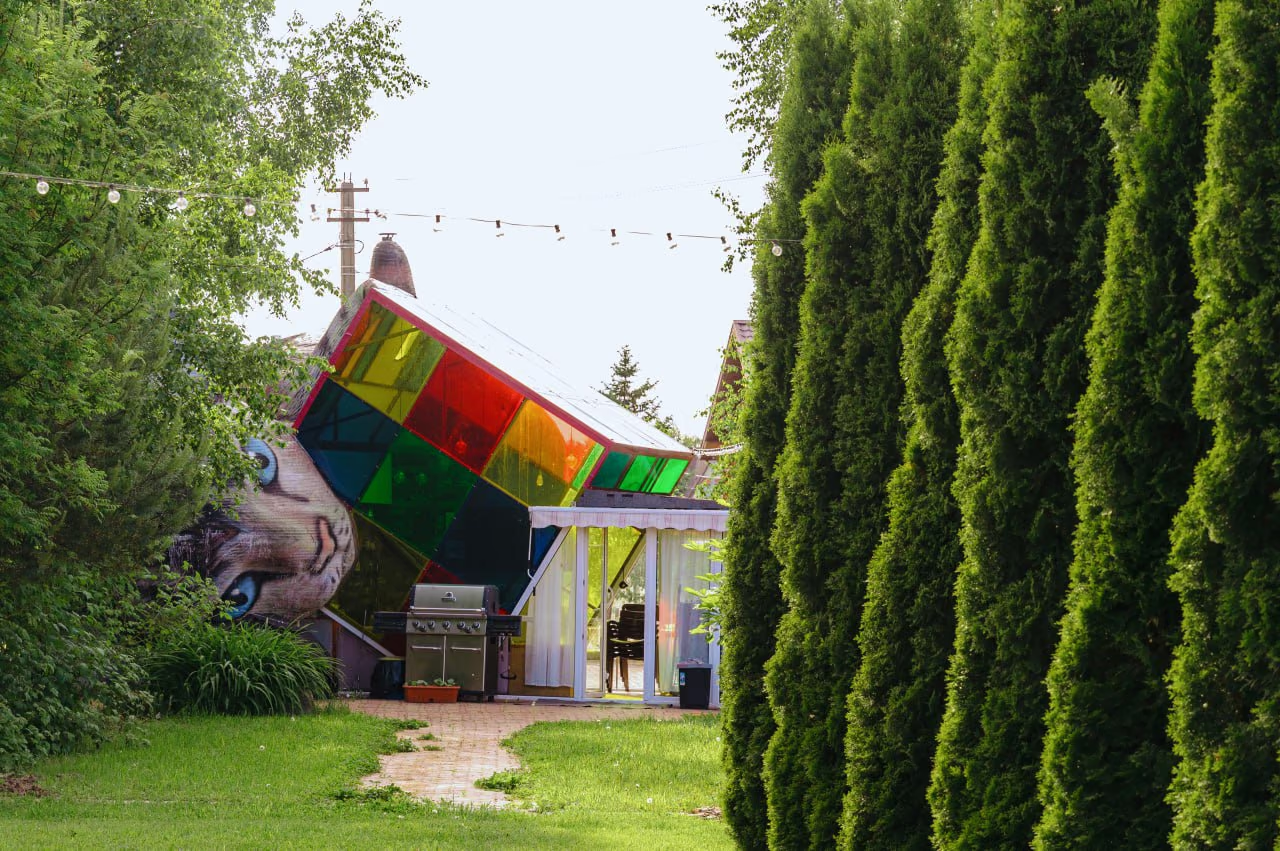
A non-residential pavilion shaped as a cat playing with a colorful cube — one of the most sculpturally complex buildings ever produced with construction 3D printing.
Architecture by Sanath Abeysekera. Construction 3D printing, digital fabrication, and site assembly by 3D4Art. The project demonstrates how additive concrete can merge sculpture, enclosure, and everyday function.
Architecture: Sanath Abeysekera · Construction 3D printing: 3D4Art
- 23 m²usable floor area
- 150printed blocks
- 5.4 mpavilion height
Concept
Sculpture that became a building
The pavilion was conceived as a cat playing with a colorful cube — a design that merges figurative art with functional architecture. The goal was to show that construction 3D printing can deliver forms that are nearly impossible to build with traditional methods.
At the time of commissioning, similarly complex figurative shells had not yet been printed at this scale. The project became a reference for sculptural additive architecture.
Key project facts
- 01Sculptural form
- Figurative geometry that would be impractical or prohibitively expensive with conventional formwork.
- 02150 printed blocks
- The digital model was split into transportable segments sized for workshop printing and site lifting.
- 03Workshop production
- All blocks were printed in a controlled indoor environment before transport to the assembly site.
- 04Site assembly
- Modules were positioned on a prepared foundation and joined into one coherent pavilion.
- 05Exterior art finish
- The cat figure received a hand-painted exterior treatment after assembly and enclosure completion.
- 06Summer kitchen
- 23 m² of usable interior area inside a 5.4 m-tall non-residential pavilion.
Architecture
Figurative massing and ornamental surfaces
The design stacks a readable cat silhouette against a geometric cube volume. Printed concrete carries structure, curvature, and aperture rhythm; the cube uses a welded metal frame with polycarbonate glazing.
After assembly, the cat figure received a hand-painted exterior treatment that transforms the printed shell into a vivid public-facing artwork.
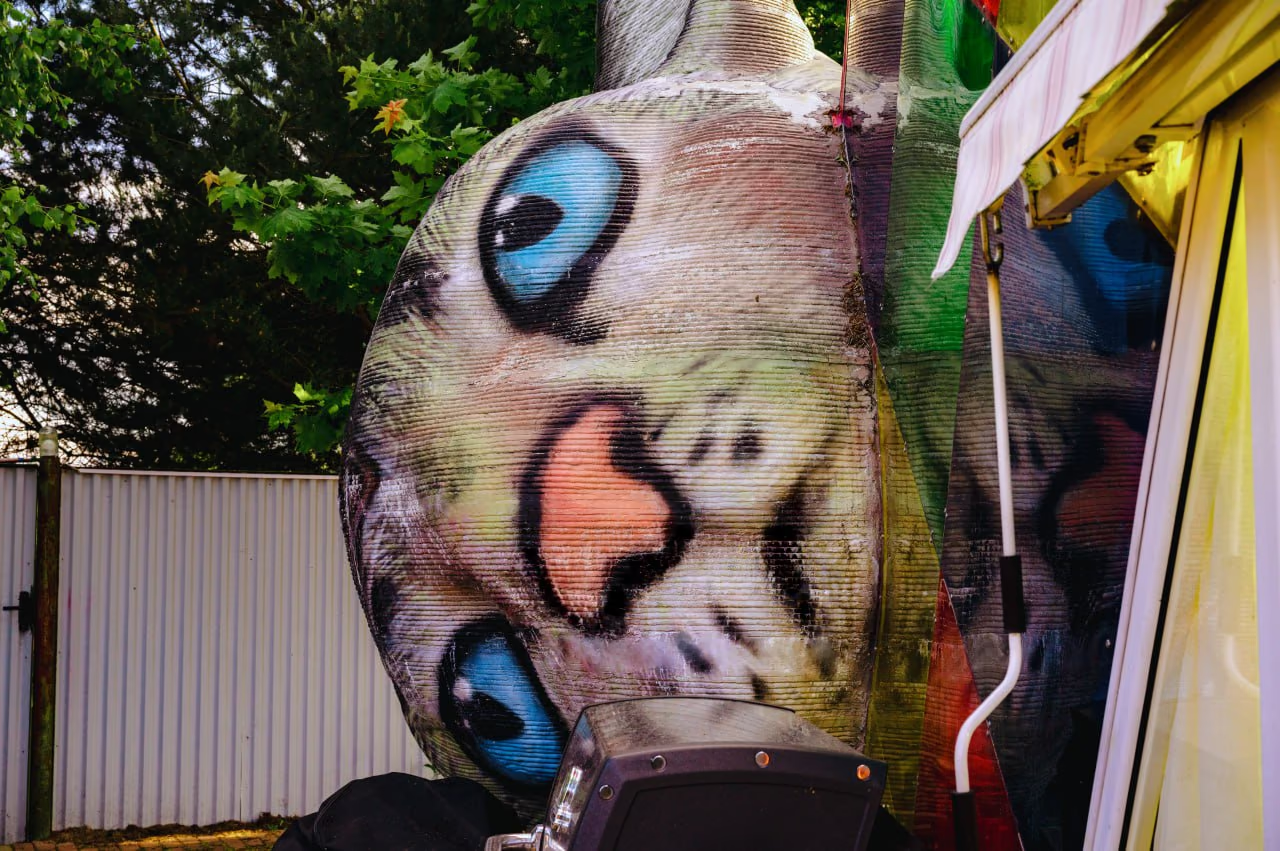
Painted cat head
3D printing
Workshop production of 150 blocks
Printing took place in workshop conditions. The digital model was split according to printer reach, block weight, and transport constraints. Machine code was prepared for each segment before production began.
After fabrication, blocks were transported to the assembly site, set on the foundation, and finished inside and out during the following construction season.
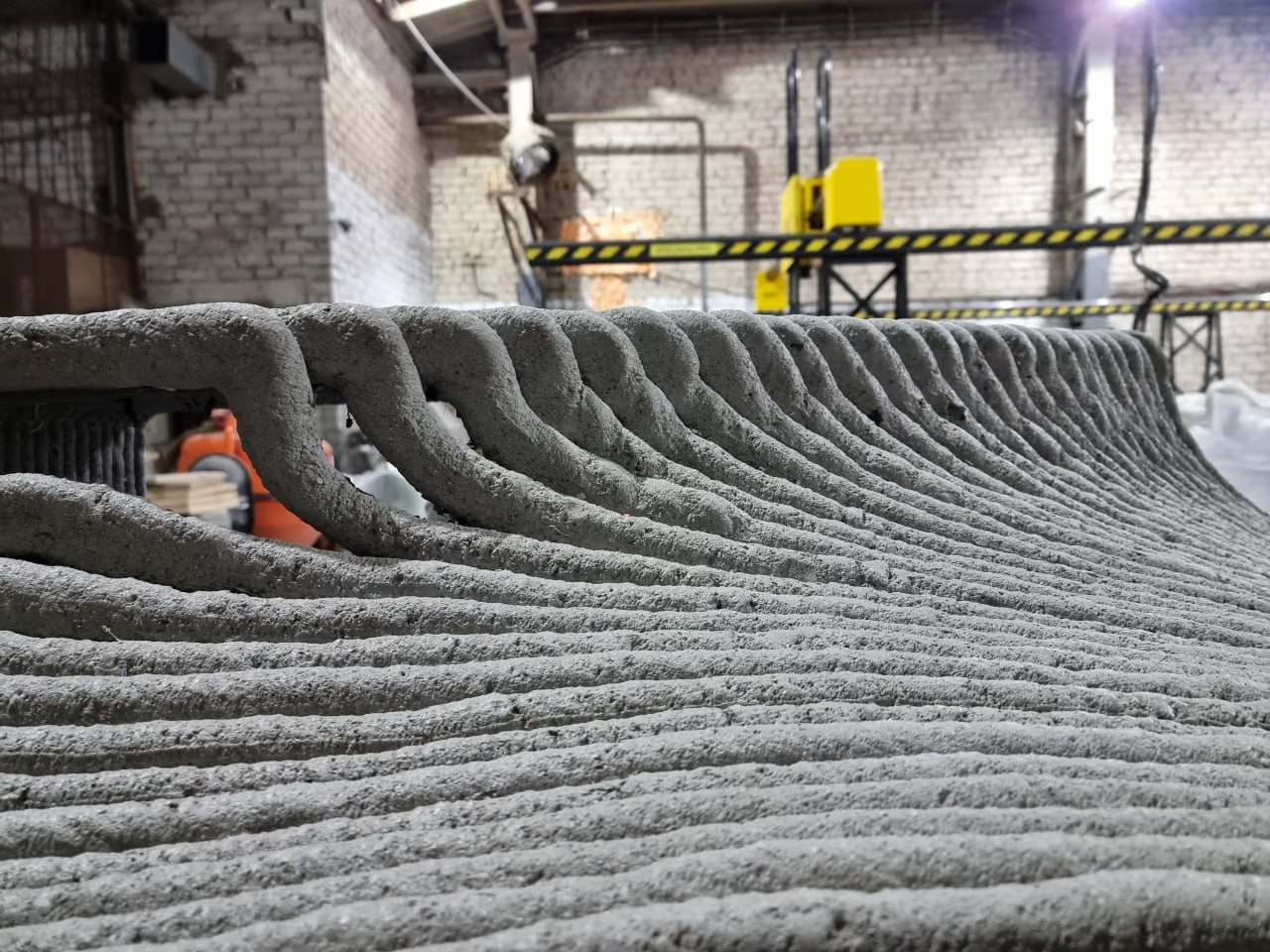
Active extrusion
Structure
Printed shell, fill, and glazed cube
The cat volume is built from M350-grade printed concrete with foam-concrete infill. The cube element combines a welded steel frame with polycarbonate panels. The pavilion operates as a summer kitchen with full utility connections.
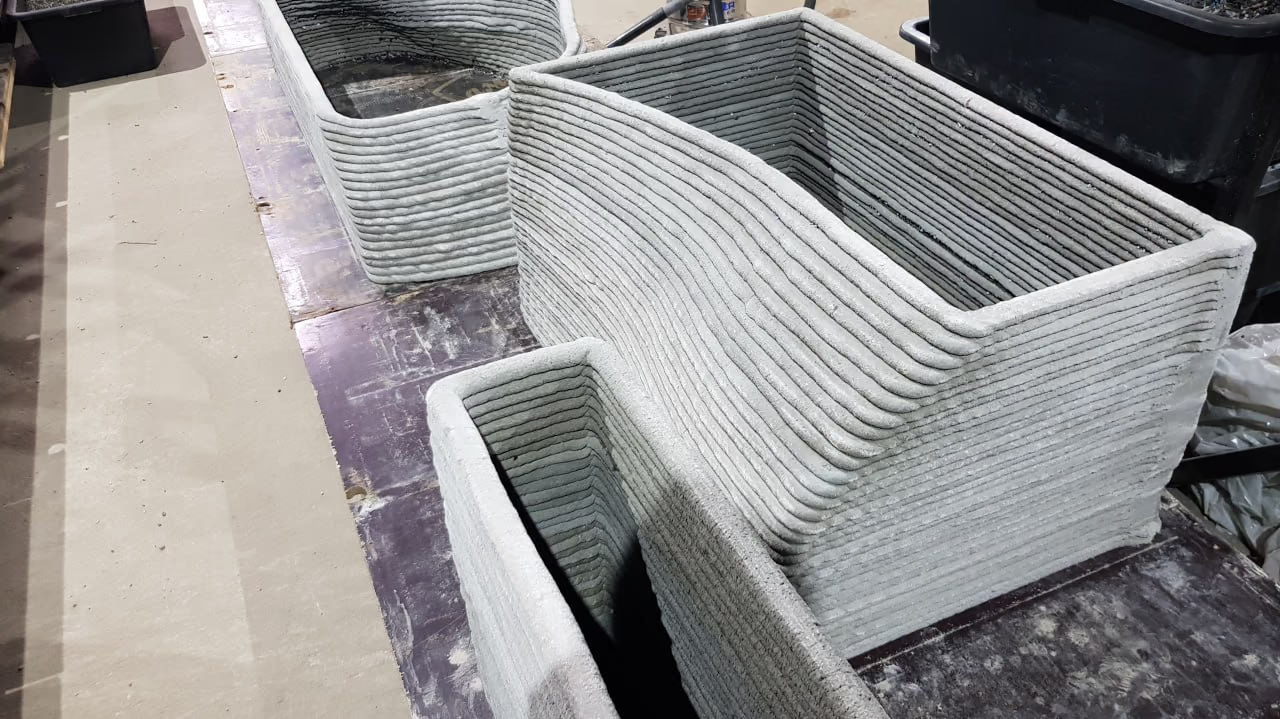
Structure and finishes
- Cat figure: M350-grade printed concrete with foam-concrete fill
- Cube volume: welded metal frame with polycarbonate glazing
- Program: non-residential summer kitchen, 23 m² usable area
- Height: 5.4 m pavilion with integrated utilities
- Exterior: hand-painted artwork on the printed cat shell
What the Cat House established
- 01
Construction 3D printing can deliver figurative architecture at pavilion scale
- 02
Workshop modularization makes sculptural geometry buildable and transportable
- 03
Additive concrete, glazing, metal structure, and art finish can coexist in one delivered object
- 04
Complex forms become practical when digital splitting and site assembly are planned from the start