
Portfolio · Social infrastructure
3D-Printed Medical Center
Primary healthcare in additive construction
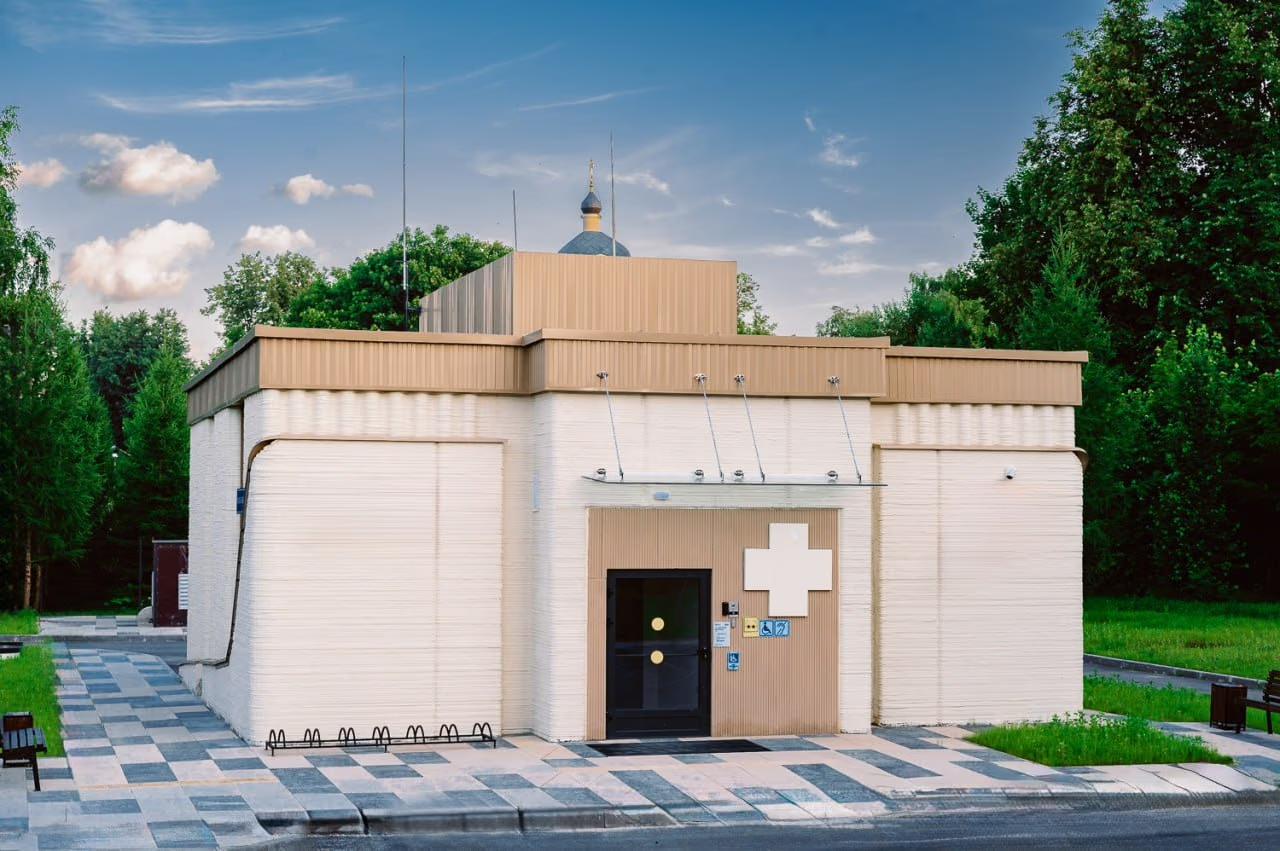
A social facility built with construction 3D printing technology. This medical center is the first of its kind to be constructed with 3D printing and has successfully passed state expert review.
Architectural design and 3D printing by 3D4Art. The project demonstrates how additive construction can deliver architecturally complex healthcare buildings on an accelerated schedule.
Architectural design and 3D printing: 3D4Art
- ~100 m²floor area
- 2 weeksnet printing time
- State reviewpassed successfully
Concept
Modern healthcare through additive construction
The project was implemented to provide primary healthcare. The choice of 3D printing was driven not only by construction speed but also by the ability to create architecturally complex forms beyond standard modular boxes.
It represents a significant step toward scaling the technology for social infrastructure, proving its reliability through state expert review.
Key project facts
- 01Primary healthcare
- Built to provide essential medical services through a dedicated social infrastructure program.
- 02Complex geometry
- Non-standard forms that reflect the client vision while staying within a compact ~100 m² footprint.
- 03Three-layer walls
- Inner finish, structural corrugated shell, and an outer screen envelope of variable height.
- 04Winter enclosure
- Temporary climate-controlled shelter protected fresh concrete from frost and wind during curing.
- 05State expert review
- Successfully passed formal expert review — a milestone previously achieved only by the Mellya project.
- 06Operational status
- Printing completed in late February 2025; the facility opened in early 2026 and is now in service.
Architecture
Unique geometry and facade expression
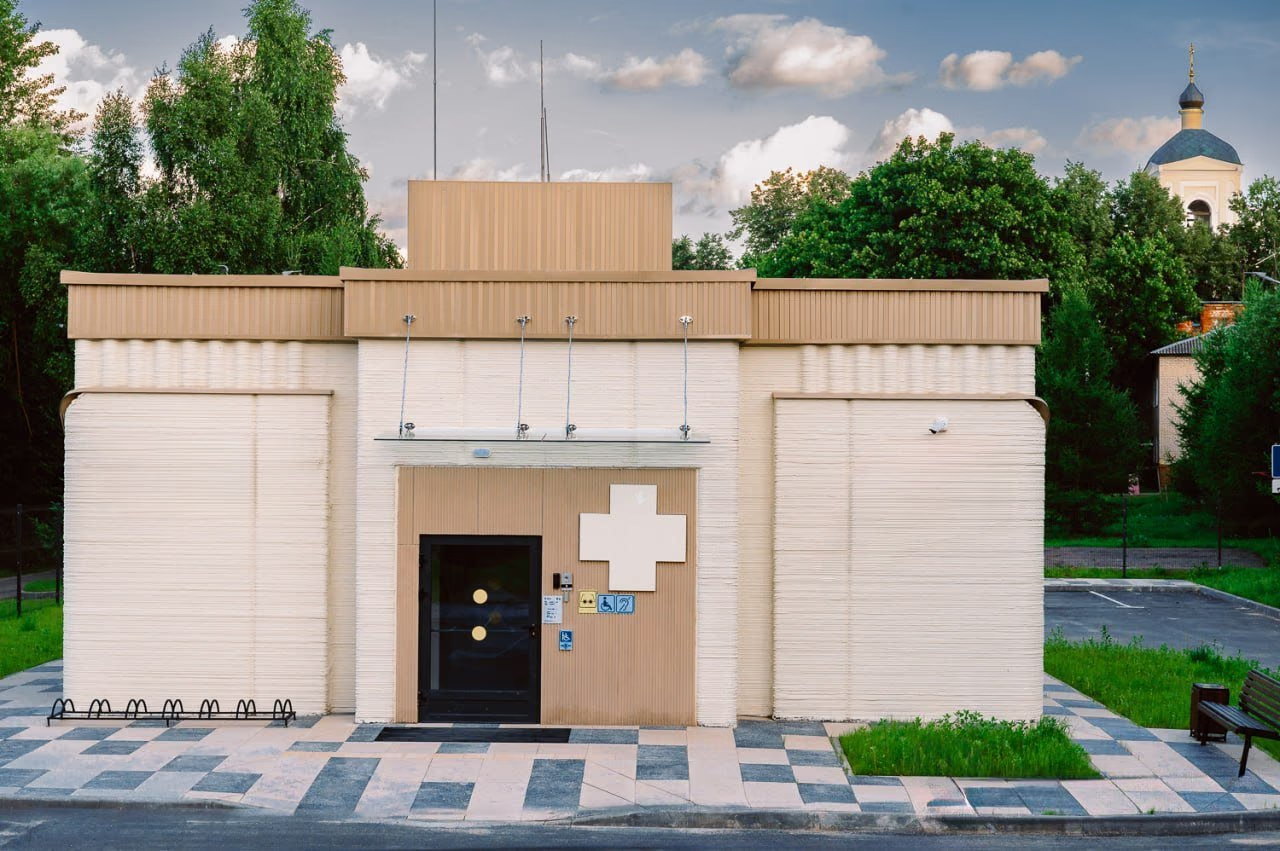
The appearance of the medical center differs significantly from standard buildings, reflecting the client architectural vision. The main volume reads as rising from a flat base through a variable-height outer screen wall.
A flat roof completes the final built version, while the entrance is marked by a glass canopy and clear medical signage integrated into the printed envelope.
Envelope passage
3D printing
Winter printing on site
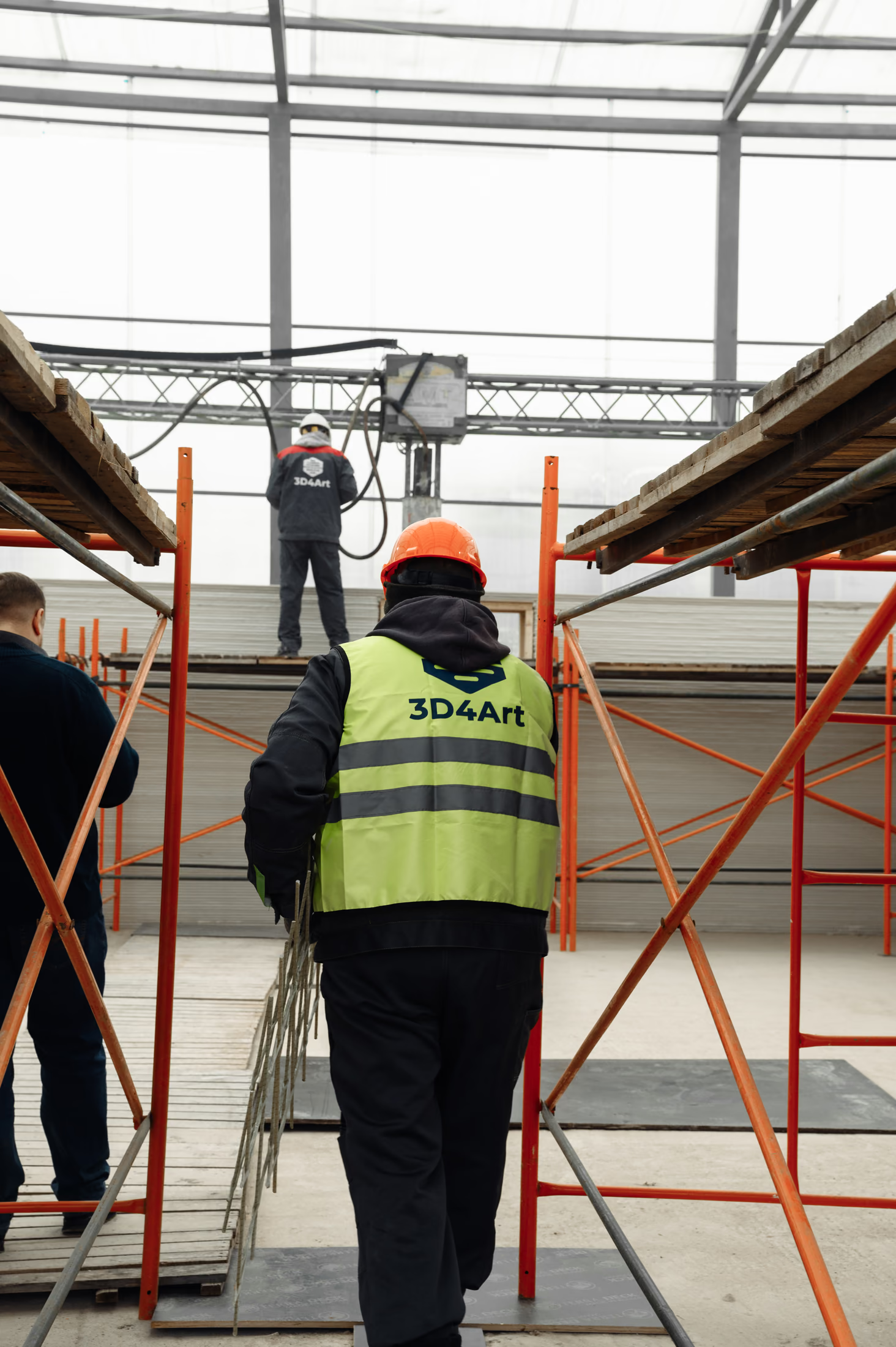
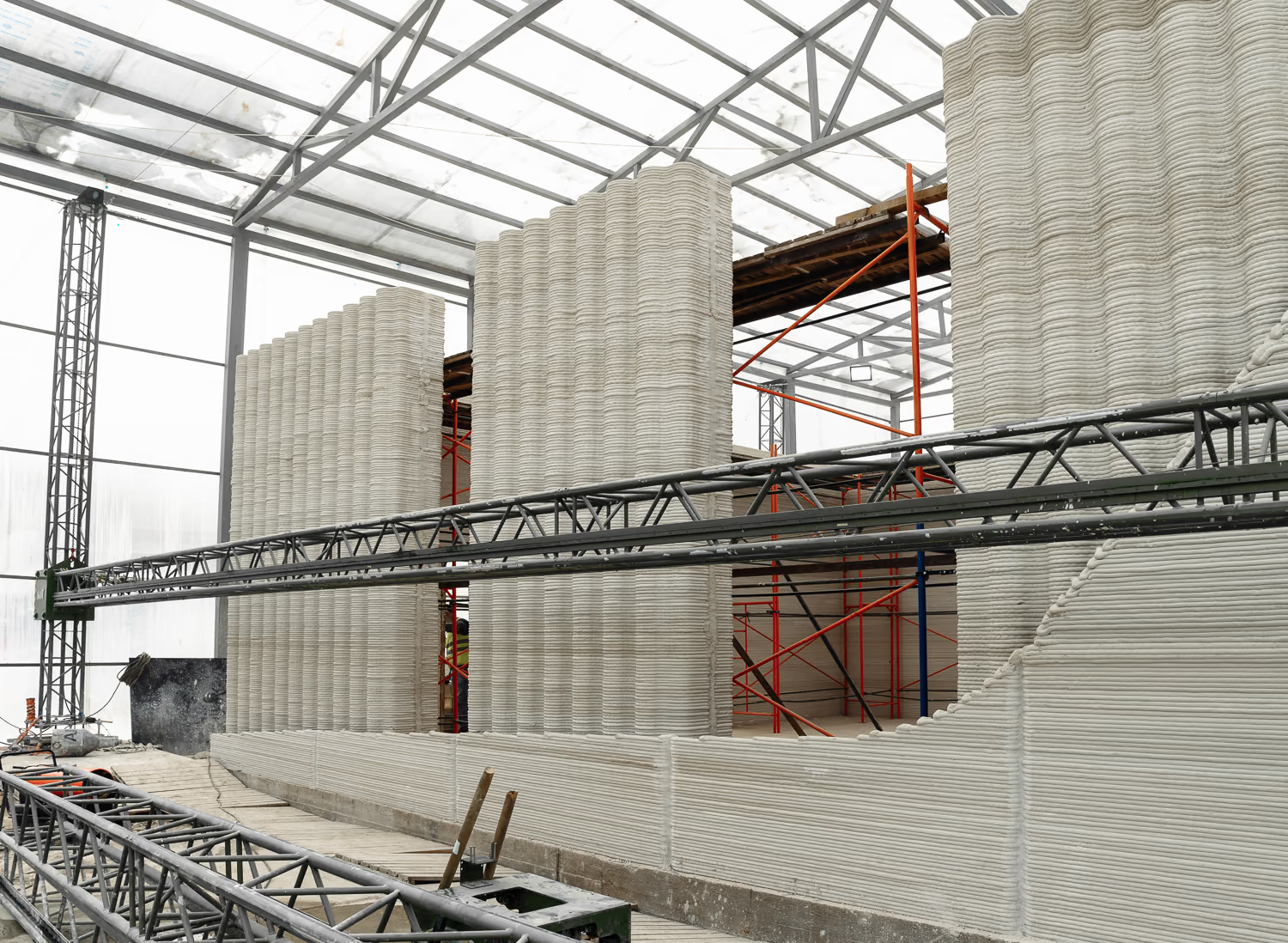
Printing started in late 2024 and was completed in late February 2025, with a net on-site printing time of two weeks. Winter conditions required a temporary climate-controlled enclosure to ensure proper curing and strength gain.
Winter enclosure
Structure
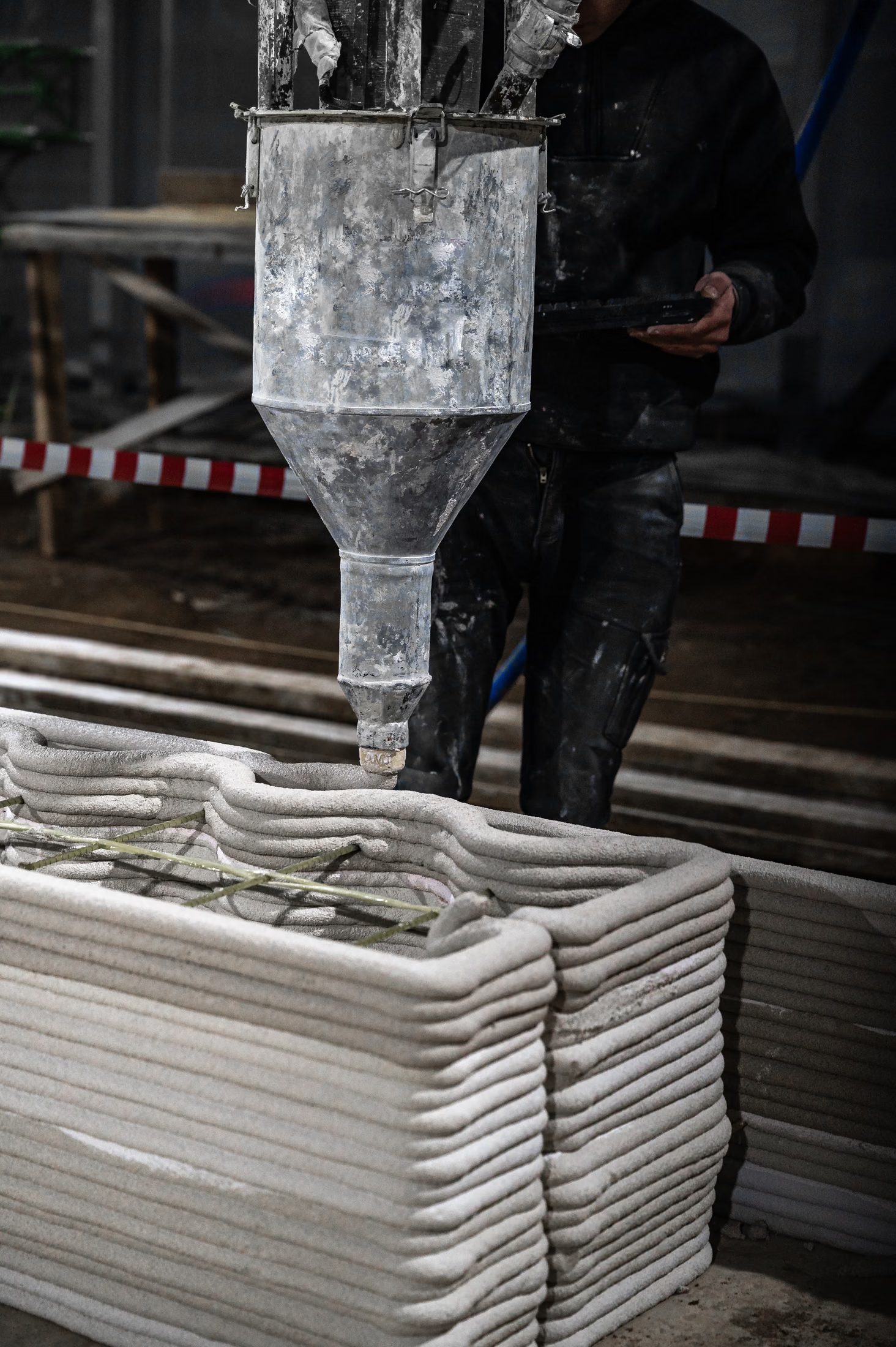
Three-layer printed wall assembly
The 3D-printed wall combines an inner smooth surface, a structural corrugated layer, and an outer screen envelope of variable height. Insulation is integrated between the layers without cold bridges.
Thermal and structural integration
- Inner layer: smooth surface created by 3D printing
- Structural layer: main corrugated sinusoidal wall section
- Outer envelope: additional printed screen wall of variable height
- Polystyrene concrete fill between layers for thermal insulation
Why 3D printing for this project
- 01
Accelerated delivery of essential social infrastructure
- 02
Architectural complexity beyond standard prefabricated forms
- 03
Reliable performance verified through state expert review
- 04
Winter-capable workflow with climate-controlled enclosure
- 05
A repeatable model for healthcare buildings at compact scale