Closed loop: control, printing, climate

Here are the engineering solutions behind each element of the ecosystem. No marketing. Only what works on site.

Construction Printer

Gantry kinematics. Screw pump. Rigid frame

The printer is designed for continuous printing with cement mixtures. No compromises with desktop technologies: rack-and-pinion instead of belts, screw instead of piston, carbon and aluminum instead of steel.

Specifications and design
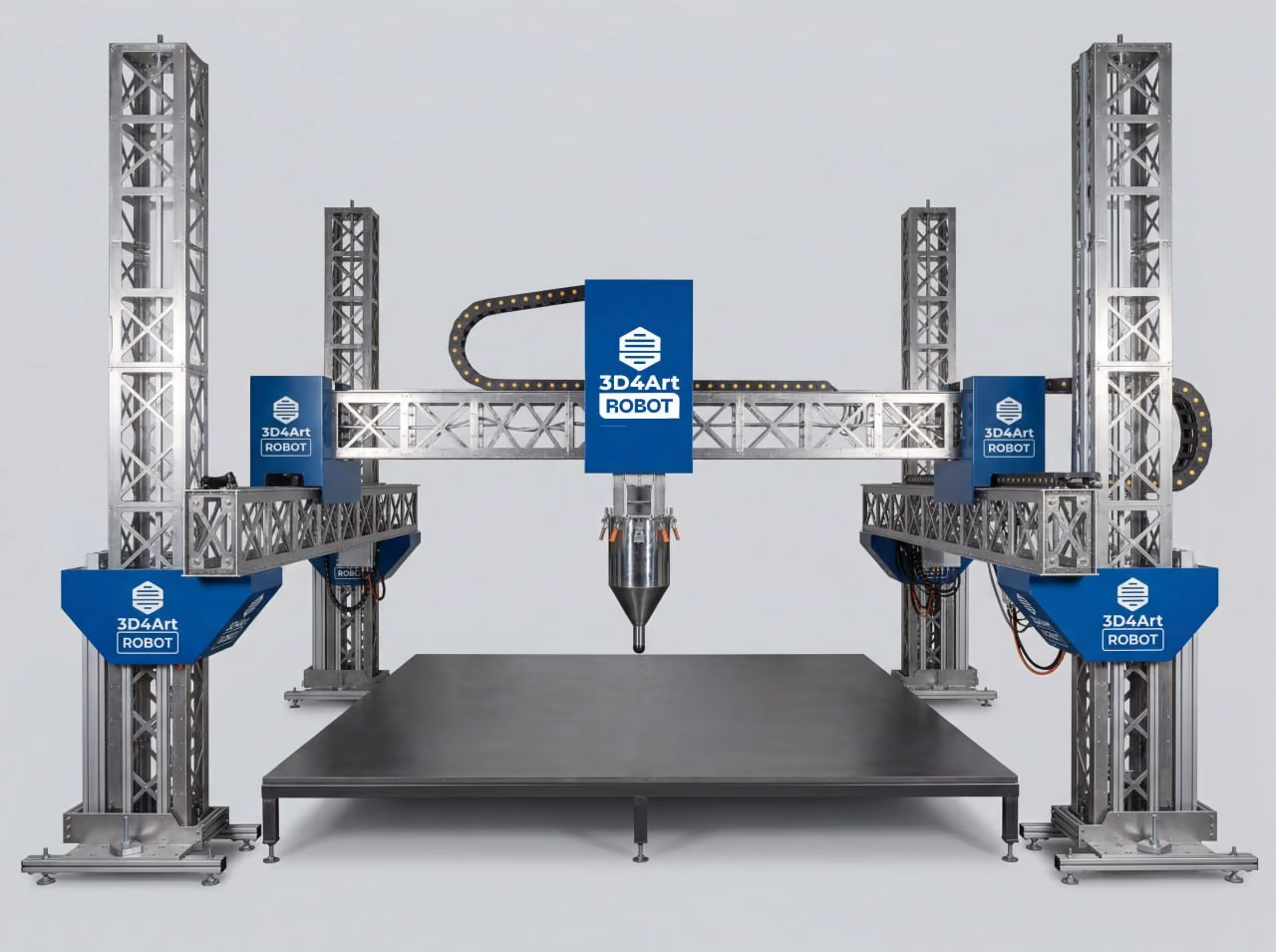
Robot-3D4Art portal construction printer — front view of gantry frame and print head

Rack-and-pinion kinematics

Drive on a rack and pinion, no slippage. Beam rigidity without sagging under load. Positioning repeatability of 2 mm — critical for layer alignment on multi-meter structures.

Why this matters: No trajectory drift over long distances. The first and last layers match exactly.

Screw pump with 4 lubrication circuits

Constant pressure feed — layer thickness does not jump during a shift. Automatic lubrication every cycle: pump life is measured in years, not months. 120 L hopper, interchangeable nozzles 20–50 mm.

Why this matters: Stable extrusion at 1.35 m³/h without operator intervention.

Sensors

  • Mixture level in the hopper — alerts when a new batch is needed.
  • Position sensors along X-Y-Z — deviation is visible before it becomes a defect.
  • Visual control camera — the operator sees the layer, not just the screen coordinates.

Why this matters: The operator has full information to intervene in the G-code execution.

Frame: aluminum + carbon

Load-bearing aluminum profiles. Carbon tubes at the key load points. Steel rigidity — without steel weight.

Why this matters: Portability. The printer is assembled on site without crane equipment. Disassembled for relocation to the next object.

Slicer

Not plastic slicing. The mathematics of the cement layer.

The slicer doesn't just cut a 3D model. It accounts for the rheology of the construction mixture: viscosity, hydration time, shrinkage. The result is G-code adapted to the behavior of concrete, not thermoplastics.

Learn more
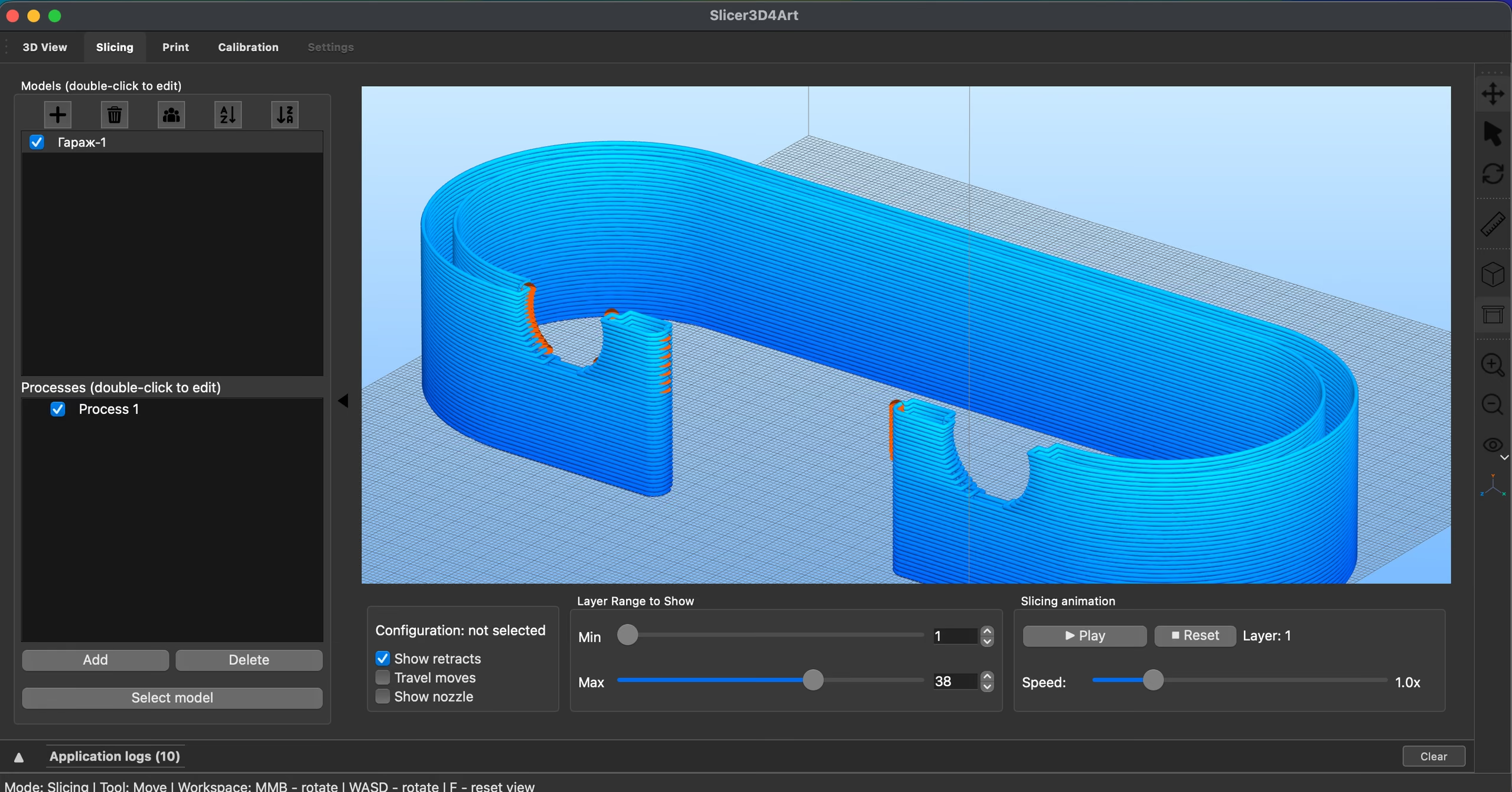
3D4Art Slicer layer and toolpath preview screen

Slicing considering rheology

A cement mixture is not a plastic filament. It flows, sets, and shrinks. The slicer accounts for this when slicing the model into layers:

  • Extrusion speed is adjusted at corners, starts, and stops — where typical slicers cause blobs or gaps.
  • Layer thickness is calculated for the specific mixture composition.
  • Hydration time is considered when planning pauses — so the next layer bonds to the set, but not dried out, previous layer.

Why this matters: The wall comes out smooth, without sagging or gaps. Not because the operator is a genius. Because the slicer understands the material.

Path planning and G-code

The slicer generates universal G-code. The nozzle path is optimized:

  • Smooth transitions at corners without stopping extrusion.
  • Minimization of idle moves.
  • Adaptation to the geometry of the specific object: a load-bearing wall and a partition are sliced differently.

Why this matters: The G-code is universal — suitable for any machine that understands the standard. You are not tied to our hardware.

Printer control module

For our printer, the slicer has a built-in control module. The operator works in one window:

  • Loads the model.
  • Adjusts layer parameters for the mixture.
  • Starts printing.
  • Sees sensor feedback: mixture level, position, camera image.

Why this matters: No need to switch between software and controller. The slicer and control panel are one unit.

Hardware independence

The slicer is supplied with our printer. But it is not tied to it. G-code can be loaded into a third-party machine — gantry, robotic, delta. Integration via API for BIM and Digital Twin.

Why this matters: You are not forced to buy the entire ecosystem. The slicer works as a standalone product.

All-Weather Enclosure

Geodesic dome. Modified arch. Protection without seasonal limitations

The enclosure is not a tarp over a printer. It is an engineered structure designed for wind and snow loads. Assembles in 3–7 days and operates year-round.

Learn more
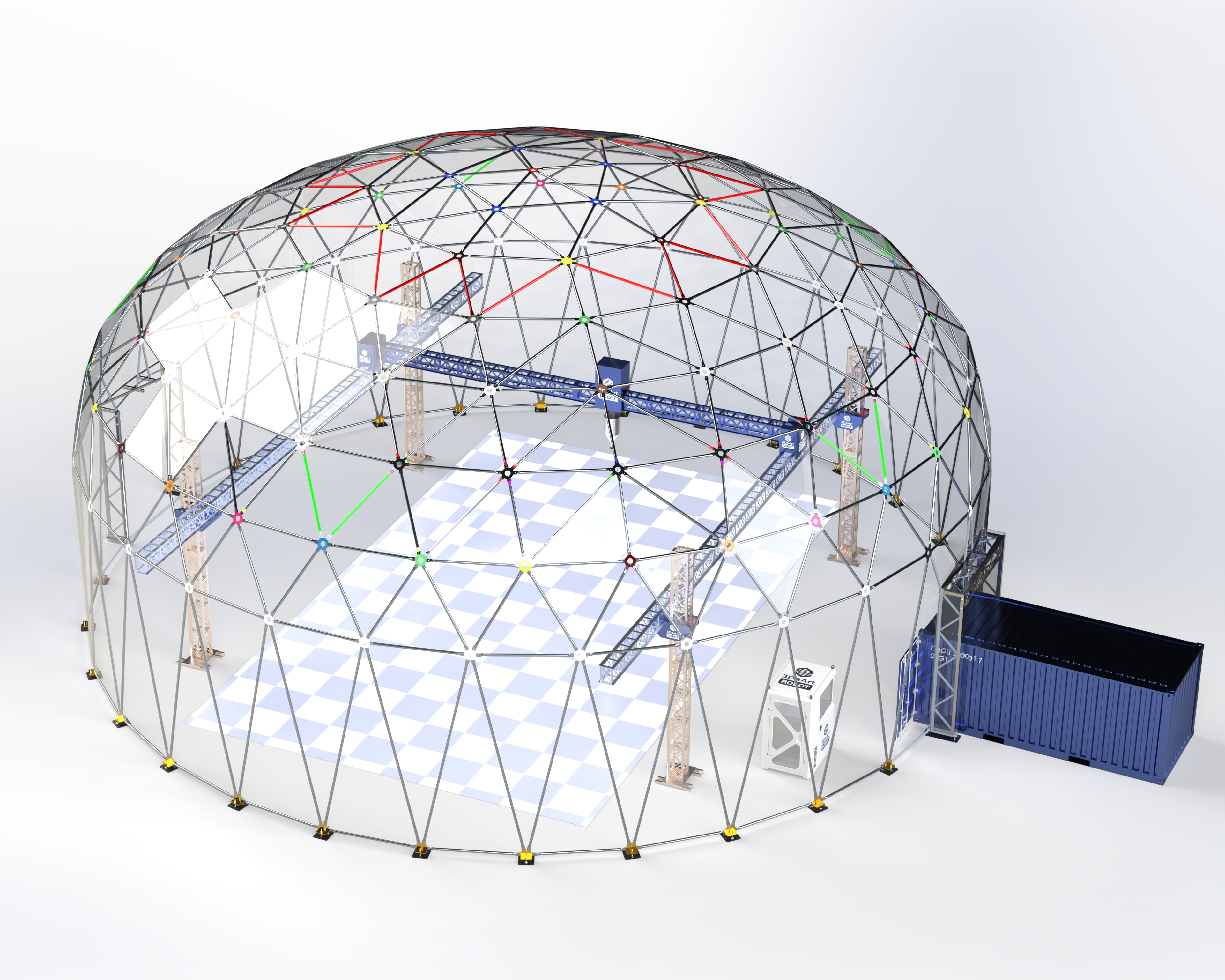
DomeGuard enclosure concept around a construction 3D printing work zone

Geodesic frame

The dome is assembled from aluminum arches according to a geodesic scheme. This structure distributes the load evenly across all elements:

  • Snow load: up to 240 kg/m².
  • Wind load: up to 70 kg/m².
  • No central supports — the entire interior space is free for equipment.

Modified arch

A classic tent has walls at an angle — usable volume is lost along the perimeter. Our dome combines a sphere and a vertical wall 5.5 m high:

  • +30% usable volume compared to tents of the same diameter.
  • Shelving, equipment, and work areas can be placed along the perimeter.
  • Gate 3.3 × 2.7 m for forklift access.

Membrane and climate

Multilayer membrane made of fire-safe PVC (Class G1):

  • UV protection.
  • Wind protection.
  • Heat retention.

Why this matters: A controlled microclimate is created inside. Optional — ventilation, heating, and humidification system. Outside can be -15°C, inside stable +10°C and above.

Assembly and mobility

The dome assembles in 3–7 days. A crew of several people, no heavy machinery needed. When moving to a new site, the enclosure is disassembled and transported in standard transport.

Three technologies, each with its own engineering school.Together — a process that works 365 days a year